
The Complete Guide to IMZ Lake Keowee

What Is IMZ Lake Keowee and Why It Matters for Shoreline Owners
IMZ Lake Keowee refers to the Impact Minimization Zone — a regulated buffer area defined within Duke Energy’s Shoreline Management Plan (SMP) for Lake Keowee in Upstate South Carolina. It determines what you can and cannot build, clear, or alter along the lake’s shoreline.
Here’s a quick overview of what the IMZ means for lakefront property owners:
| Topic | Key Detail |
|---|---|
| What IMZ stands for | Impact Minimization Zone |
| Who enforces it | Duke Energy (FERC licensee, Project No. 2503) |
| What it governs | Dock construction, clearing, excavation, shoreline stabilization |
| Permit required? | Yes — through Duke Energy Lake Services |
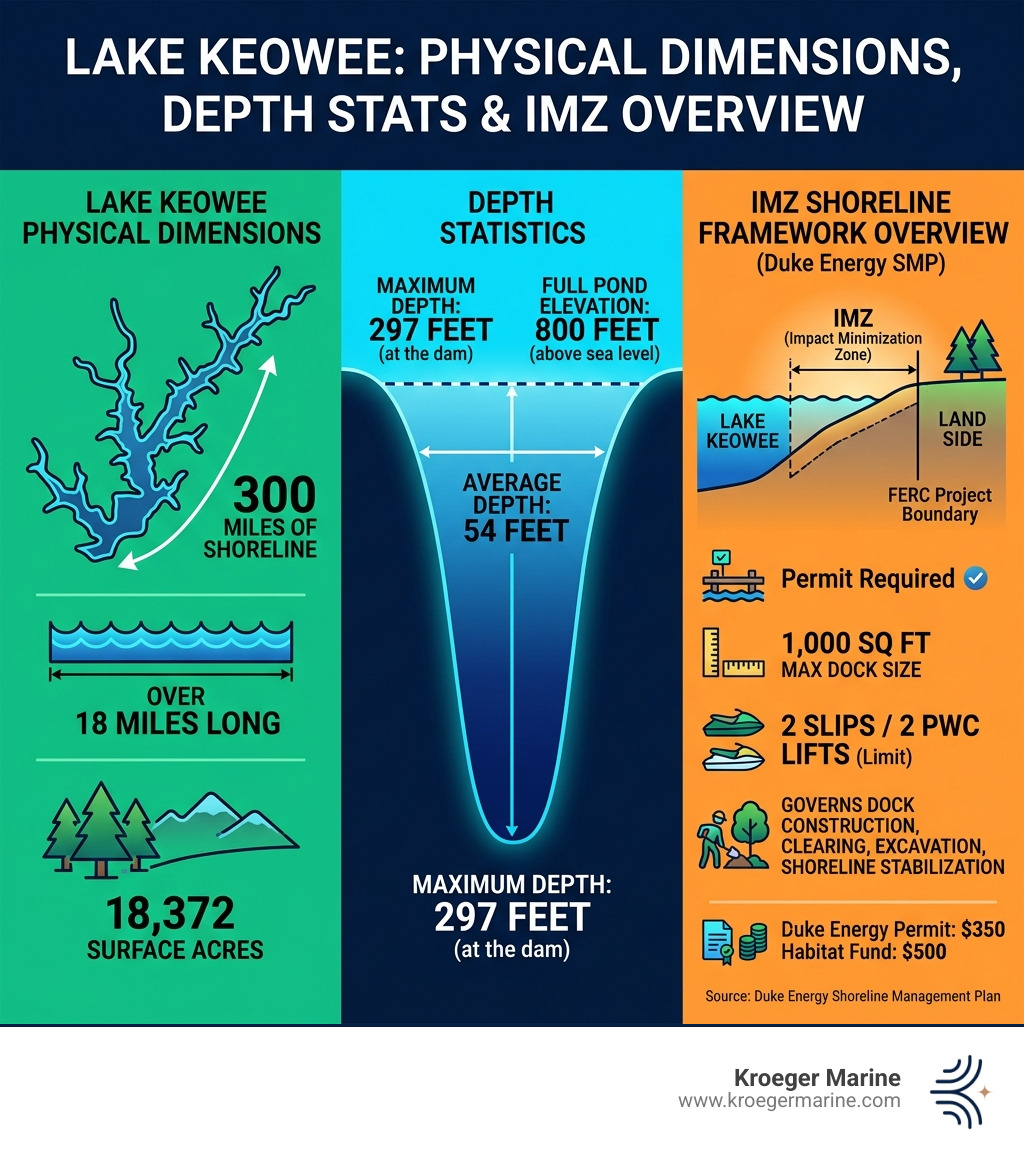
| Dock size limit | Up to 1,000 sq ft, 2 slips, 2 PWC lifts |
| Permit cost | $350 (Duke Energy) + $500 (Habitat Enhancement Fund) |
Lake Keowee is one of the most stunning and sought-after lakes in South Carolina. Its crystal-clear emerald water, Blue Ridge foothills backdrop, and 300 miles of shoreline make it a premier destination — and a prime address for luxury lakefront homes.
But owning property here comes with a layer of regulation most buyers don’t expect. Duke Energy controls the shoreline up to a specific elevation, and any dock, structure, or land modification within the FERC Project Boundary requires permits and must comply with the SMP.
Understanding the IMZ framework isn’t optional — it’s essential before you build, replace, or modify anything on your Lake Keowee waterfront.
Understanding the IMZ Lake Keowee Framework
When we talk about IMZ Lake Keowee, we are diving into a sophisticated regulatory environment designed to balance the needs of power generation, environmental conservation, and private recreation. The Impact Minimization Zone (IMZ) is a core component of the Duke Energy Shoreline Management strategy.
As the licensee under the Federal Energy Regulatory Commission (FERC Project No. 2503), Duke Energy is responsible for managing the Keowee-Toxaway Hydroelectric Project. This means they don’t just own the water; they manage the land within the “Project Boundary.” This boundary typically extends to a specific elevation contour around the lake.
The Shoreline Management Plan (SMP) acts as the rulebook for this area. It utilizes Shoreline Classification Maps to designate which areas are “Natural,” “Stabilized,” or “Impact Minimization” zones. If your property falls within an IMZ, it means Duke Energy has identified that specific stretch of shoreline as requiring careful management to minimize the impact of human activity on the lake’s ecosystem and water quality.
Public access is a major priority for FERC, but so is the protection of the scenic and environmental values that make Lake Keowee so special. For us as homeowners and dock builders, this means every nail driven and every rock moved must align with these broader project purposes.
Geography and History of the Emerald Lake
Lake Keowee is often called the “Emerald Lake” because of its strikingly clear, green-tinted waters. But it wasn’t always here. This massive 18,500-acre reservoir is a feat of 20th-century engineering.
The Creation of a Masterpiece
Construction began in the late 1960s and was completed in 1971. To create the lake, Duke Energy built two massive structures: the Keowee Dam and the Little River Dam. The Keowee Dam itself is an impressive 3,500 feet long and 170 feet high. By impounding the Keowee River and the Little River, they created a lake that stretches 26 miles long and reaches widths of up to 3 miles.

Physical Stats at a Glance
The lake sits approximately 800 feet above sea level. It boasts an average depth of 54 feet, though it can plunge to a maximum depth of 155 feet near the dams. With 300 miles of shoreline winding through Oconee and Pickens counties, the lake’s shape has often been compared to a Christmas tree, with its many fingers and coves acting as the branches.
A Legacy Beneath the Surface
The Lake Keowee History and Formation is deeply tied to the Cherokee heritage of Upstate South Carolina. The name “Keowee” comes from the Cherokee word ᎨᎣᏫ, meaning “place of the mulberries.” Before the valley was flooded, it was home to Keowee Town, the capital of the Lower Cherokee settlements. While the town now rests beneath the water, thousands of artifacts were recovered by archaeologists prior to the inundation, preserving a piece of that history for future generations.
Powering the Upstate
While we enjoy the lake for its beauty, its primary industrial purpose is cooling the three nuclear reactors at the Oconee Nuclear Station. Additionally, the Keowee Hydro Station generates 158 megawatts of clean energy. The lake’s “skimmer wall” is a fascinating piece of tech—it draws cool water from 150 feet deep to ensure the nuclear station remains operational even during the hottest South Carolina summers or periods of drought.
Shoreline Management and IMZ Lake Keowee Regulations
If you are planning to build a retreat on the shores of IMZ Lake Keowee, you need to get familiar with the “804 line.” This is the elevation contour (804 feet above sea level) that generally defines the boundary between private property and Duke Energy’s managed land.
Navigating the 804 Line and Permitting
Any activity below this line—and often just above it—requires a permit. This includes excavation, shoreline stabilization, and, most importantly, dock construction. Duke Energy Lake Services is the governing body here.
When it comes to docks, the regulations are quite specific:
- Size Limits: Private docks are generally limited to a maximum of 1,000 square feet. This includes the walkway and the pier head.
- Capacity: You are typically allowed up to 2 boat slips and 2 PWC (Personal Watercraft) lifts.
- Design: Did you know sundeck docks are allowed on Lake Keowee? These “upper deck” style docks are popular for maximizing sun exposure and views, provided they meet the specific height and safety requirements set by Duke.
- Structural Integrity: Using the right materials is vital. For instance, dock pilings Lake Keowee must be installed to withstand the lake’s depth and occasional water level fluctuations.
If your dock needs to extend toward a neighbor’s property or if you have less than 100 feet of shoreline, you may need an Encroachment Agreement. We always recommend getting a professional survey with GPS coordinates before submitting your application to avoid delays.
Environmental Protection and the IMZ Lake Keowee Habitat
The IMZ Lake Keowee framework isn’t just about restrictions; it’s about enhancement. The Keowee-Toxaway Habitat Enhancement Program (KTHEP) is a brilliant initiative funded by permit fees. Property owners pay a one-time $500 fee into this fund when they apply for a new dock permit.
Since 2015, the KTHEP has funded nearly $2.3 million in projects, with over $1.1 million available for 2025 alone. These funds go toward:
- Fish Attractors: Installing artificial structures to provide cover for bass and other species.
- Native Plantings: Replacing invasive species with native flora to prevent erosion and provide avian habitats.
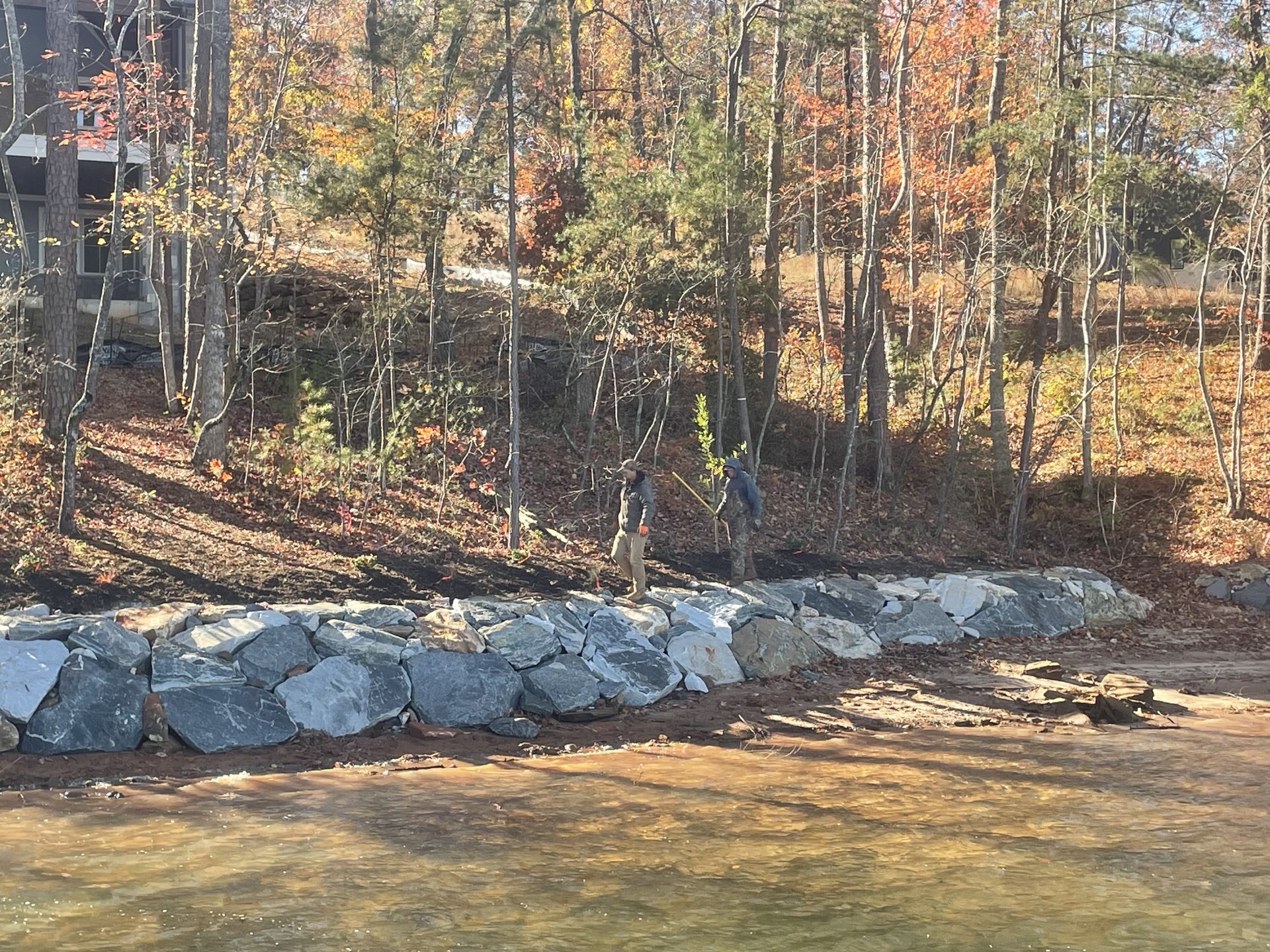
- Riprap and Stabilization: We often help clients with riprap Seneca SC Lake Keowee projects. Riprap—large stones placed along the shoreline—is the gold standard for preventing erosion while maintaining a natural look.
- Water Quality: By managing how we build, we ensure the “Emerald Lake” stays clear. You can find more fun facts about our Upstate South Carolina lakes and how their water quality is maintained through these collaborative efforts.
Recreation and Lifestyle on Lake Keowee
Life on Lake Keowee is about more than just following rules; it’s about the incredible rewards of doing so. The lake is a playground for outdoor enthusiasts.
A Fisherman’s Paradise
Anglers flock to Keowee for its world-class bass fishing. The lake supports four species of black bass, including the highly sought-after spotted bass. With 17 managed fish attractors and 9 public boat ramps, getting on the water and finding the “big one” is accessible for everyone.
Exploring the Gorges
One of the most scenic highlights of the area is “Jumping Off Rock,” which offers a panoramic view of the lake and the surrounding Blue Ridge Mountains. While technically overlooking Lake Jocassee, it is part of the broader Keowee-Toxaway ecosystem that defines this region. On Lake Keowee itself, kayakers love exploring the numerous islands—which some residents jokingly call the “ornaments” on the Christmas tree-shaped lake.
Sailing and Socializing
The Keowee Sailing Club is a hub of activity, hosting regular regattas that fill the lake with white sails against the deep green water. For those who prefer motorized fun, the lake’s size and depth make it perfect for wakeboarding, tubing, and sunset cruises.
Maintaining the Dream
Because the lake is a high-use environment, docks take a beating from the sun and waves. We provide high quality boat dock repair Lake Keowee to ensure that your investment remains safe and beautiful for decades.
To help you choose between the two major lakes in our area, here is a quick comparison:
| Feature | Lake Keowee | Lake Jocassee |
|---|---|---|
| Development | High (2,000+ homes) | Very Low (mostly State Park) |
| Water Clarity | Excellent (Emerald) | Exceptional (Crystal Clear) |
| Accessibility | 9+ Boat Ramps | 1 Main Boat Ramp |
| Primary Use | Residential/Recreation | Nature/Wilderness |
| Water Temp | Warmer (Nuclear Cooling) | Cold (Mountain Runoff) |
Frequently Asked Questions about Lake Keowee
What does IMZ stand for on Lake Keowee?
IMZ stands for Impact Minimization Zone. It is a classification within Duke Energy’s Shoreline Management Plan that identifies areas where development and shoreline activity must be carefully managed to protect the lake’s natural resources, water quality, and scenic beauty.
How was Lake Keowee created?
Lake Keowee was created by Duke Energy in 1971 by damming the Keowee and Little Rivers. It was designed to provide hydroelectric power via the Keowee Hydro Station and to serve as a vital cooling reservoir for the Oconee Nuclear Station.
What permits are required for a dock on Lake Keowee?
You must obtain a Lake Use Permit from Duke Energy Lake Services. This requires a $350 application fee to Duke and a $500 contribution to the Keowee-Toxaway Habitat Enhancement Fund. You will also need to provide a professional survey/plat, GPS coordinates, and a detailed drawing of the proposed dock.
Conclusion
Navigating IMZ Lake Keowee can feel like a full-time job, but it is the price we pay for living on one of the cleanest, most beautiful bodies of water in the United States. Whether you are looking at the historical roots of the “Place of Mulberries” or planning a modern sundeck dock for your family to enjoy, the key is working within the framework provided by Duke Energy.
At Kroeger Marine, we’ve been part of this community since 1985. We don’t just build docks; we build handcrafted, luxury solutions that respect the unique geography of the Upstate. From Seneca to the northern reaches of the lake, our expertise ensures your shoreline project is compliant, durable, and aesthetically stunning.
If you’re worried about the red tape or the rising tides, let us help you. We can protect your shoreline with expert erosion control and guide you through every step of the permitting process. Let’s keep Lake Keowee emerald for generations to come.


