
Custom Dock Systems for Lake Keowee, Hartwell & Jocassee
Every great dock starts below the deck. Kroeger Marine designs and builds complete floating dock systems (understructure, flotation, anchoring, and walkway) in our Seneca, SC shop, engineered for your water depth, your shoreline, and the rules of your lake.
Request an Estimate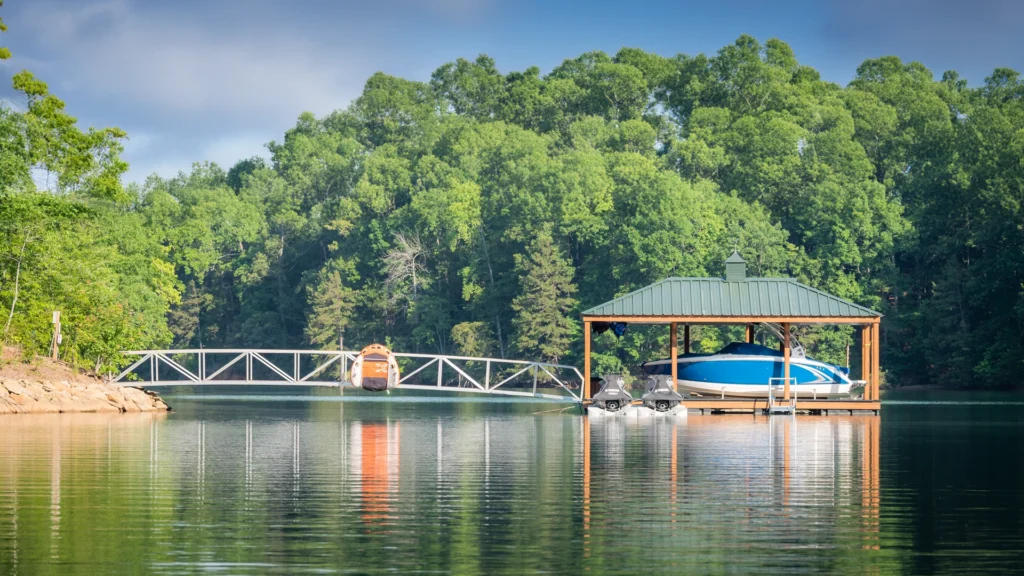
One Engineered System, From Shoreline to Slip
A dock system is everything that works together to put a stable, level deck on moving water: the aluminum understructure and posts, the floats that carry it, the pilings or cables that hold it in place, the ramp that connects it to shore, and the slips, lifts, and storage built around your boats.
When those pieces are designed together instead of bolted together, a dock stays flatter in a wake, rides out storms, and lasts for decades. That's the difference between buying a dock and having one built as a system, and it's how we've built more than 3,700 docks since 1985.
Choosing finishes? Our custom boat docks page covers roof styles, roof materials, and decking. This page covers what holds it all up.
Floating Dock Systems
Floating Docks Built for Water That Won't Sit Still
Lake Keowee and Lake Jocassee rise and fall with Duke Energy's hydro and pumped-storage operations, and Lake Hartwell swings with the seasons and every dry spell. A floating dock system moves with the lake, so your deck stays at the same comfortable height above the water and your boat is always easy to reach.
Aluminum Understructure
An aluminum understructure is the backbone of every Kroeger dock. It's built for rigidity so the deck stays flat and solid underfoot, and it won't rot, warp, or attract insects.
Sized Flotation
Heavy-duty floats carry the whole system. We size the flotation to the weight of your dock, roof, and lifts so it rides level and stays stable in a wake.
Oversized Aluminum Posts
Posts more than 30% larger than the industry standard add strength and long-term stability, in standard, painted, or wood/synthetic-wrapped aluminum.
Flared Ramp & Walkway
Your connection to shore: a 4-foot walkway with a 6-foot flared entrance, typically 20 to 60 feet long, in aluminum, painted aluminum, or wood/synthetic-capped versions.
Slip Angles
Angled slip corners add walking room and make washing, covering, and loading your boat safer. Our bolt-in design leaves room to change the layout later.
Built by the Manufacturer
Every system is designed and fabricated by Kroeger Marine in our own facility. You work directly with the people who build your dock, with no middleman.
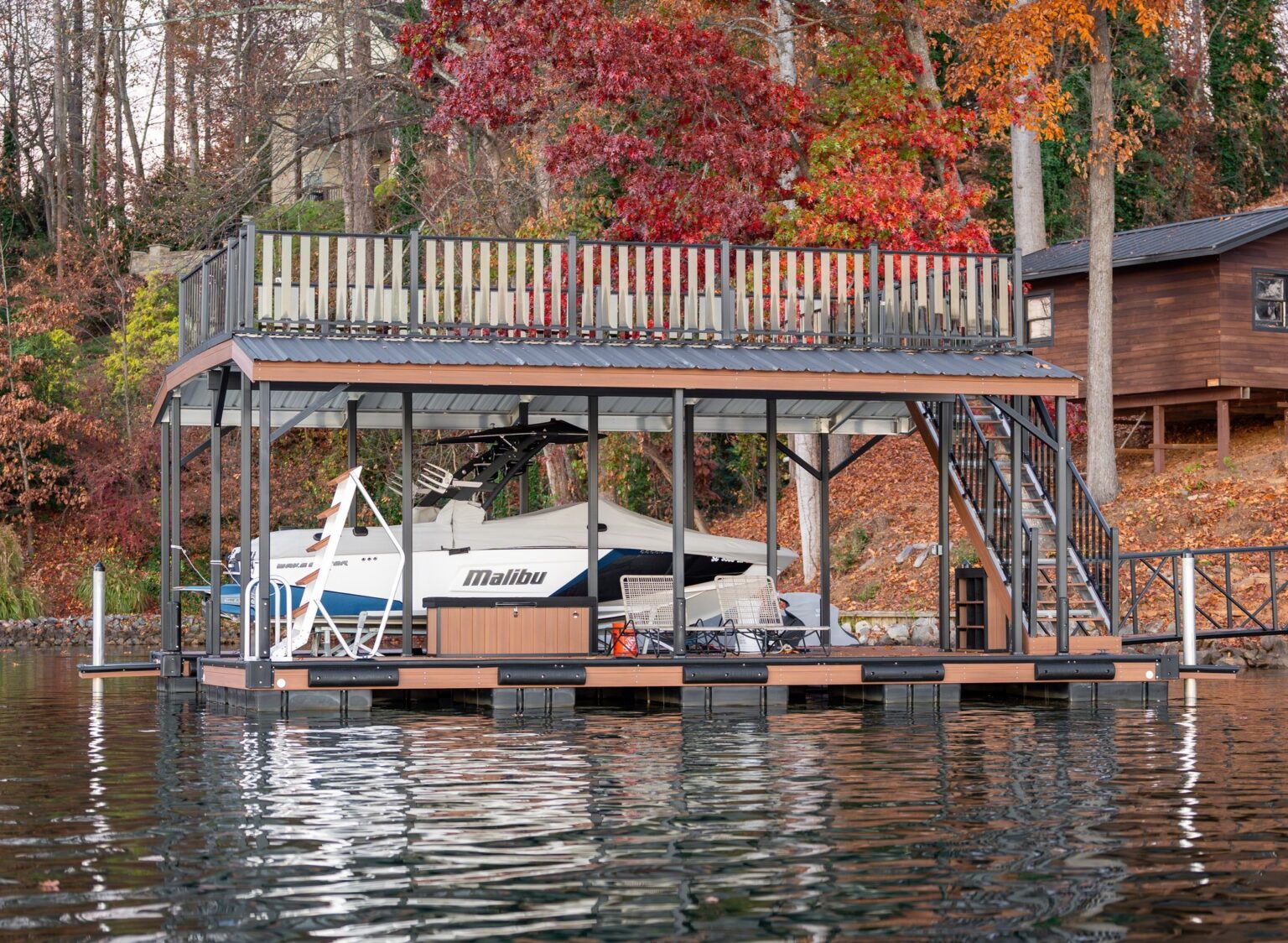
Want more background? Read our guide to custom-built floating boat docks.
Dock Anchoring
Pilings or Cable and Winch: How Your Floating Dock Stays Put
A floating dock still has to stay exactly where it was permitted. We recommend an anchoring method after looking at your water depth, lake bottom, and how much wind, wave, and wake your cove takes.

Kroeger Pilings
Best for heavy docks and exposed water with strong wind, waves, and wake.
- 5-inch aluminum pipe: Driven into the lakebed for a solid hold.
- No shore cables: Eliminates the dock cables running to shore.
- Moves with the water: Holds the dock steady while letting it ride up and down.
- Storm-ready: Extra peace of mind in stormy weather.
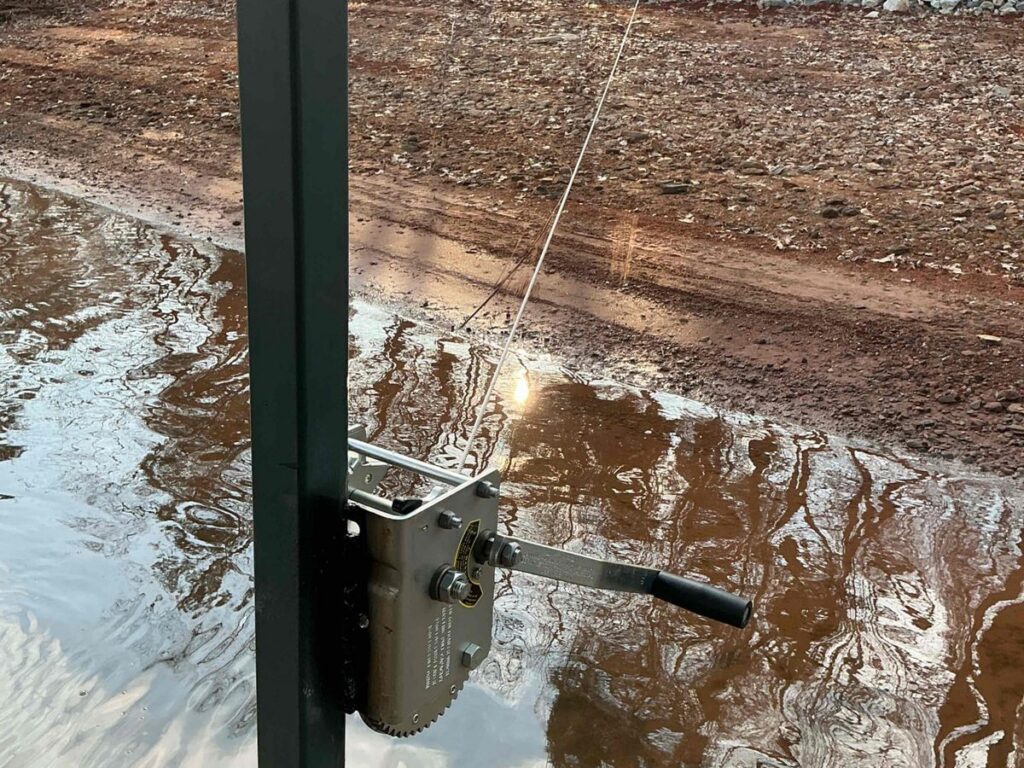
Cable & Winch
Best for protected coves, lighter docks, and budget-conscious projects.
- Affordable: One of the most common ways to anchor a floating dock.
- Flexible: Lets the dock move toward and away from shore as water levels change.
- Adjustable: Tension can be set with the winch as the lake rises and falls.
- Proven: A reliable choice for docks in sheltered water.
Dock System Layouts
Sized to Your Boats, Your Shoreline, and Your Permit
Your layout starts with what you own and how you use the water, and it has to fit your lake's footprint rules. These are the dock systems we build most often.
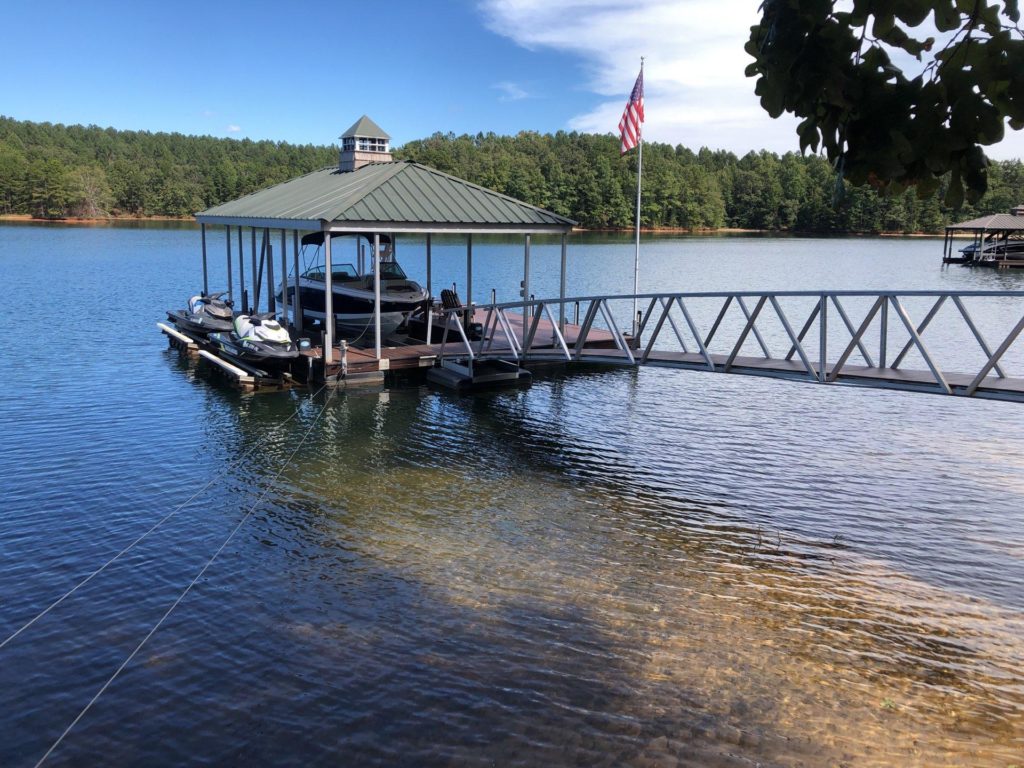
Single-Slip Docks
One covered or open slip with deck space alongside. The right fit for narrow lots, tight coves, and smaller permitted footprints.
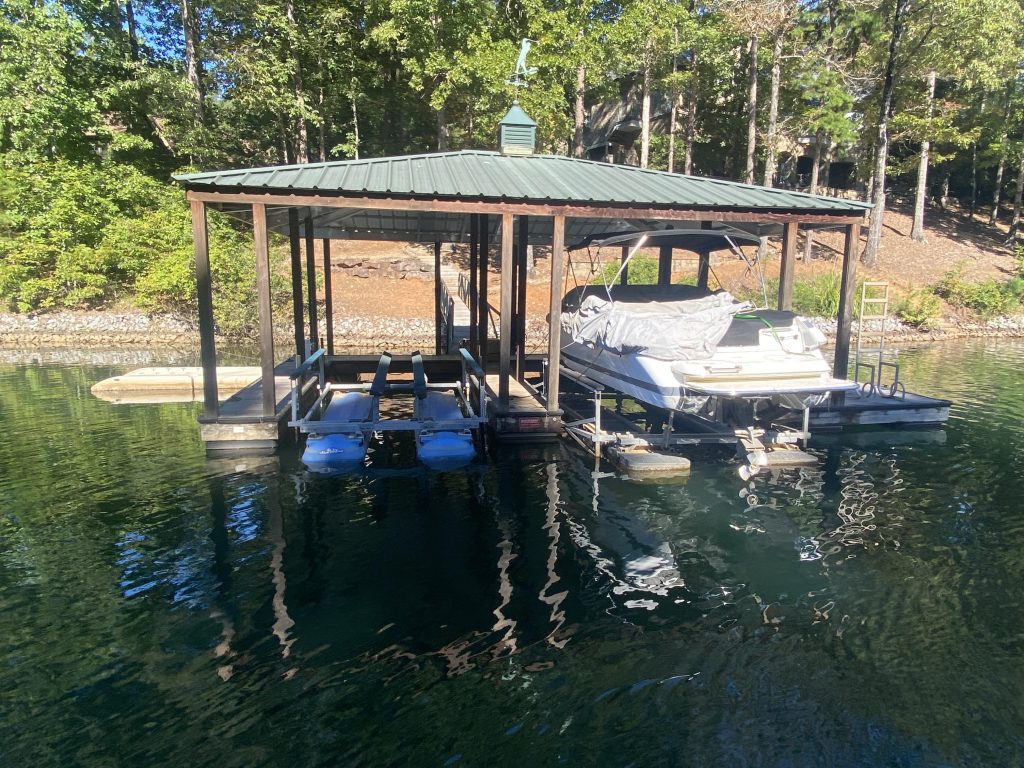
Double-Slip Docks
Room for two boats, or a boat and a second lift-ready slip. On Lake Keowee, two slips is the most Duke Energy allows, so we make both count.
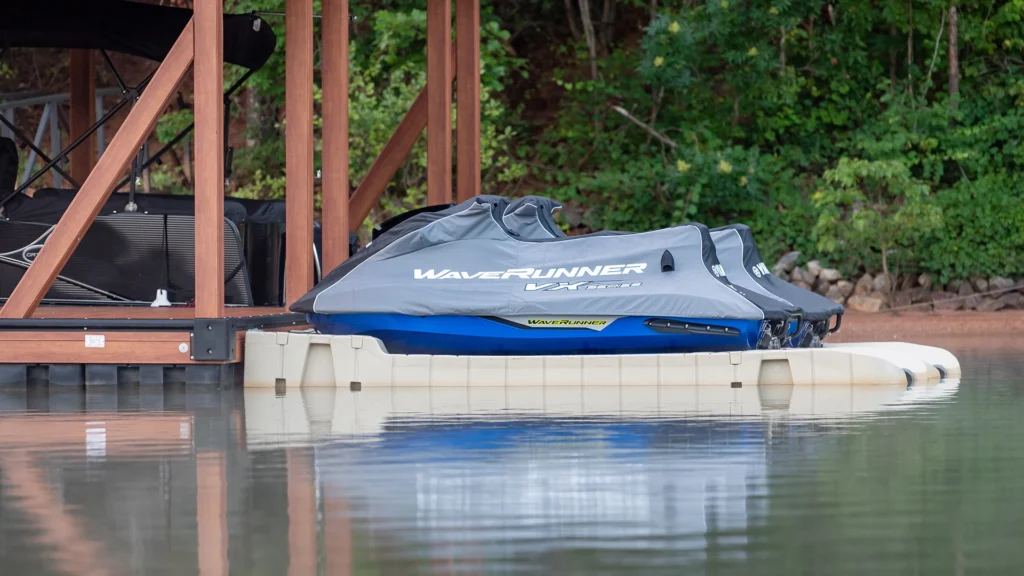
PWC Ports & Side Slips
Drive-on ports for jet skis along the side of your dock. On Lake Keowee, up to two PWC lifts don't count against your dock's square footage.
See our PWC ports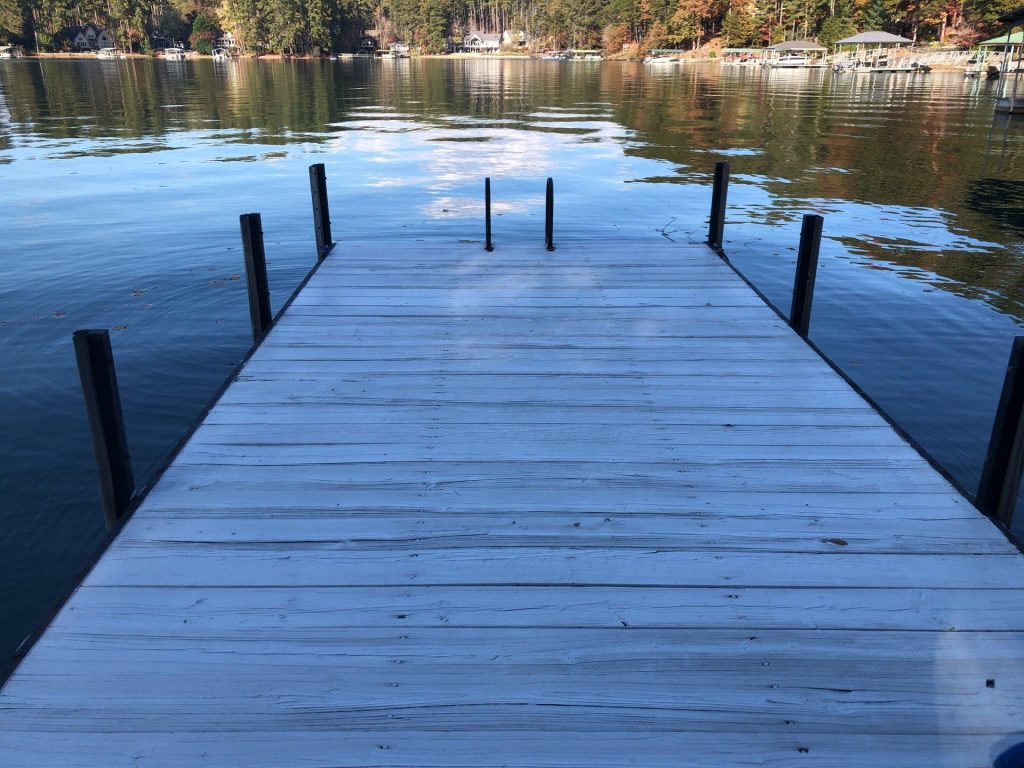
Swim & Platform Docks
An open deck for swimming, fishing, and lounging, with our LakeEze™ ladder for easy in-and-out access for adults, kids, and pets.
Meet the LakeEze ladder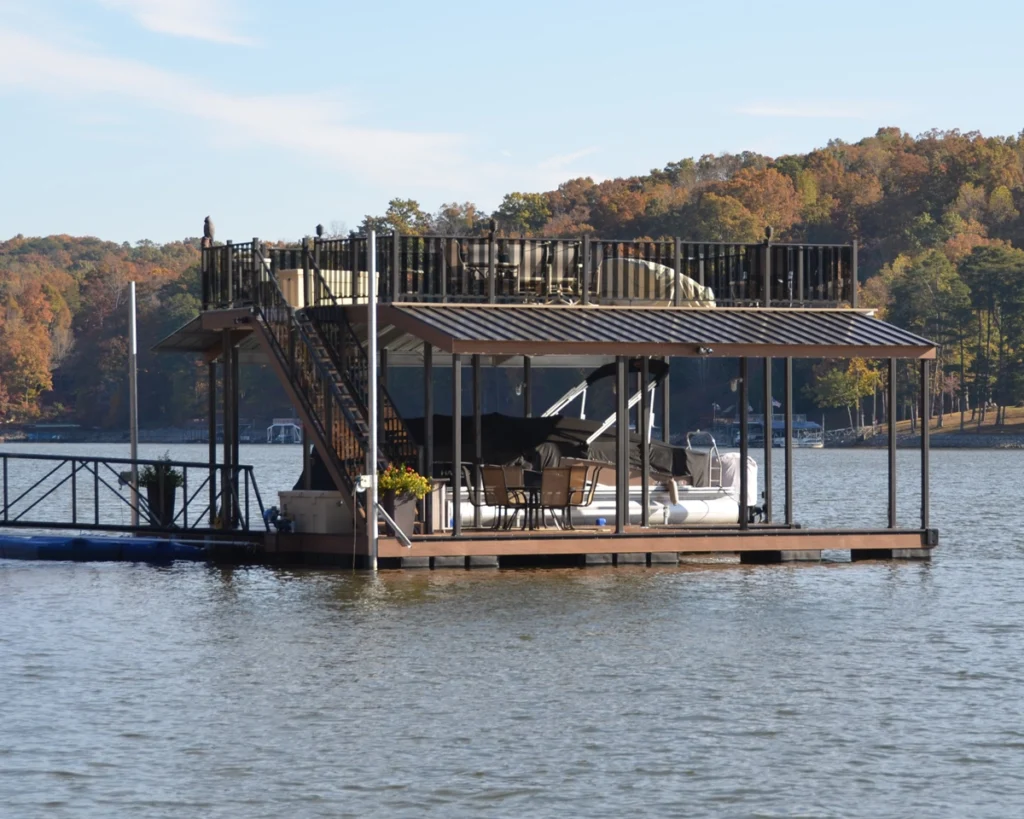
Two-Story Sundeck Docks
A second level for entertaining and lake views. Sundeck docks are allowed on Lake Keowee, though community covenants can add their own rules.
Sundecks on Lake Keowee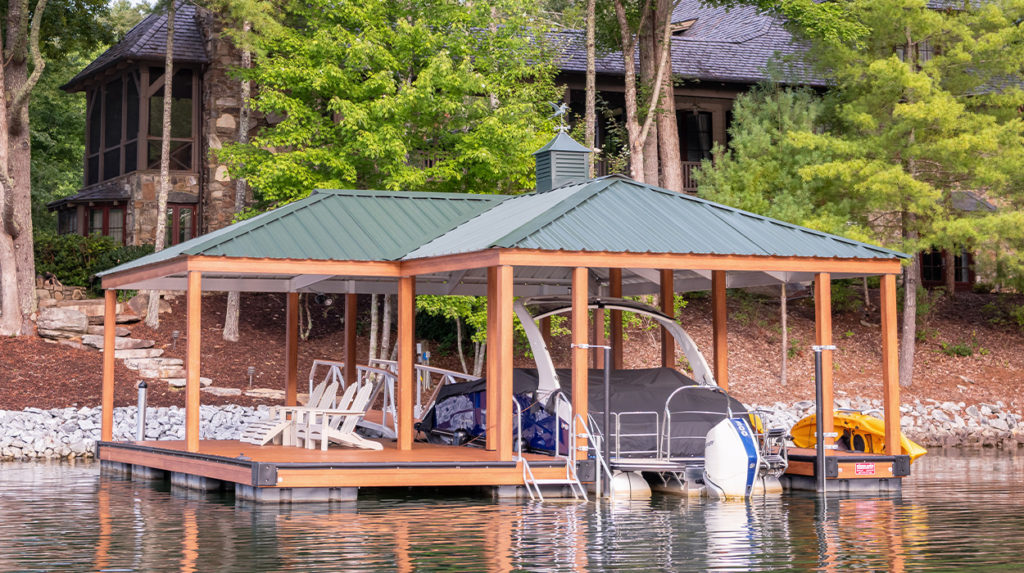
Covered Docks
Hip, hip-and-a-half, and sundeck roofs in metal, cedar shake, or copper, with decking to match.
Roof & decking optionsWhere We Build
Which Dock System Fits Your Lake?
Each lake has its own owner, its own rules, and its own water. We design every dock system to all three.

Lake Keowee Dock Systems
Our home lake. New docks, expansions, and relocations need Duke Energy approval under the Keowee-Toxaway Shoreline Management Plan, and the dock, roof, and walkway all count toward one total footprint. We size floating systems to your shoreline and handle the permit for you.
See our Lake Keowee dock services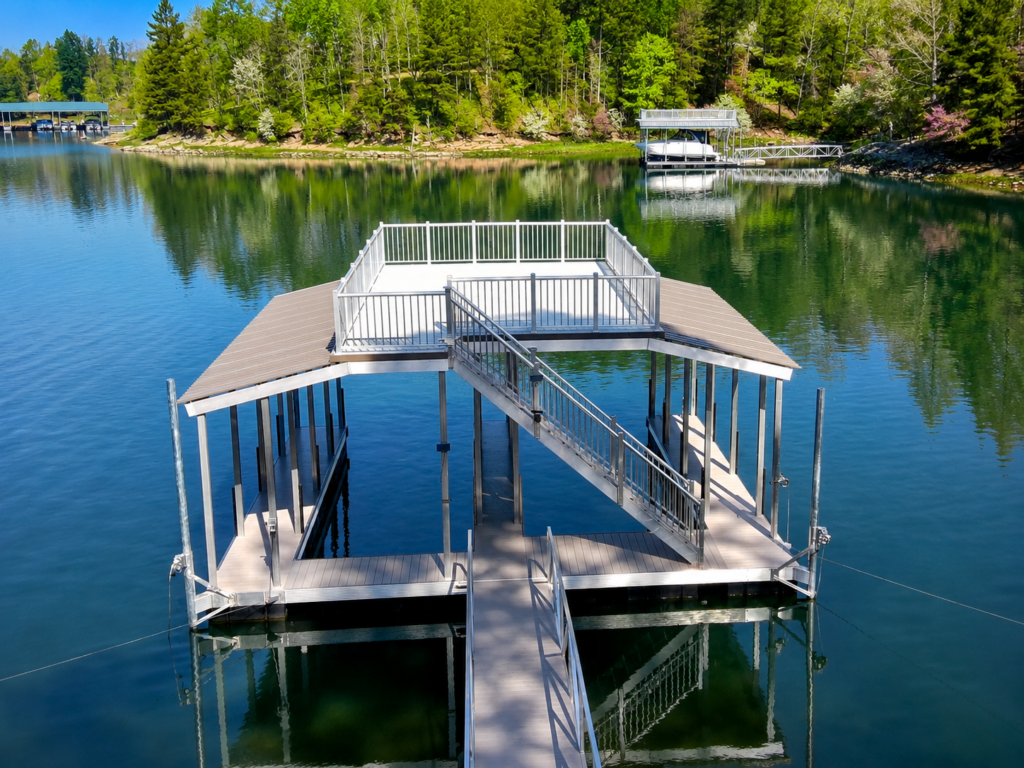
Lake Hartwell Dock Systems
A U.S. Army Corps of Engineers lake with seasonal swings, so floating systems with walkways that hinge as the water moves are the standard. Docks need a Shoreline Use Permit with engineer-approved plans and must meet Corps size, color, and placement standards.
See our Lake Hartwell dock services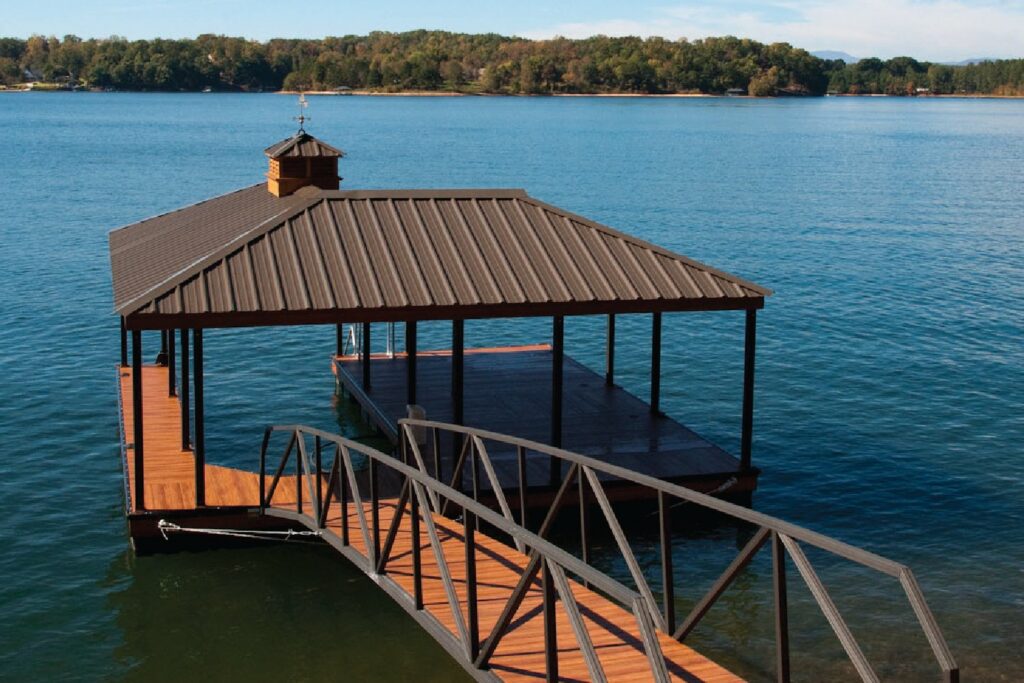
Lake Jocassee Dock Systems
Deep, clear, and steep-banked, with water levels that move with pumped-storage operations. Jocassee docks need anchoring and walkways engineered for deep water and steep shorelines, under the same Duke Energy shoreline rules as Keowee.
See all the lakes we serveWe also build across Upstate South Carolina, North Georgia, and Western North Carolina lakes. View all service areas
Complete the System
Lifts, Ports, Accessories & Shoreline From One Team
A dock system works best when everything attached to it is planned with it. We design the slip around your lift and the walkway around your bank.
HydroHoist Boat Lifts
As a HydroHoist dealer, we size the lift to your boat and build the slip around it.
Explore boat liftsPWC Ports
EZ Port drive-on ports for quick launching and dry storage of personal watercraft.
Explore PWC portsPatented Accessories
The LakeEze™ ladder, Kayak Stow & Go®, dock boxes, and dock lofts, designed and built here.
Explore accessoriesShoreline Stabilization
Rip rap and erosion control to protect the bank your walkway lands on.
Explore erosion controlDock Repair & Remodeling
Already have a dock? We repair, remodel, and upgrade existing docks.
Explore dock repairHow It Works
From Site Evaluation to First Launch
- 1
Site Evaluation
We measure water depth, check your shoreline and erosion risk, and confirm what your lake and community allow.
- 2
System Design
Your boats, your family, how you entertain, sun or shade. We plan the layout, flotation, and anchoring and give you a clear quote.
- 3
Permitting
We prepare and manage your Duke Energy or Corps of Engineers application, or check an existing permit for compliance.
- 4
Build & Install
Your dock system is fabricated in our facility and installed on your shoreline by our team.
- 5
Inspection
We inspect the finished dock for permit compliance, safety, and every feature you asked for.
Good to Know
Custom Dock System FAQs
What is a custom dock system?
It's a complete dock engineered as one unit: aluminum understructure, floats, anchoring, walkway, slips, decking, roof, and lifts. Custom means every piece is sized to your water depth, shoreline, boats, and lake rules instead of pulled from a standard kit.
Do I need a floating dock or a fixed dock?
On Lake Keowee, Lake Jocassee, and Lake Hartwell, water levels move enough that a floating dock is usually the right answer. It keeps the deck at a consistent height above the water and your boat easy to board, whatever the lake is doing. We'll confirm the best system during your site evaluation.
Should my floating dock be anchored with pilings or cables?
Pilings are best for heavy docks and spots with strong wind, wave, and wake, and they eliminate cables to shore. Cable and winch is an affordable, proven choice for protected coves and lets the dock shift toward and away from shore as levels change. Learn more about dock pilings on Lake Keowee.
Why aluminum instead of a wood dock frame?
An aluminum understructure won't rot, warp, or attract insects, and it's lighter, so it needs less flotation. Pair it with PVC or composite decking and the whole dock is low maintenance for decades.
Do I need a permit for a new dock system?
Almost always. Lake Keowee and Lake Jocassee docks are permitted by Duke Energy under the Keowee-Toxaway Shoreline Management Plan, and Lake Hartwell docks need a U.S. Army Corps of Engineers Shoreline Use Permit. Modifying, expanding, or relocating a dock usually needs approval too. We handle the application for you. See our permitting FAQ.
Can I add on to my dock system later?
Often, yes. Our bolt-in design leaves room for future changes like a PWC port, a lift, or slip angles. Any addition still has to fit your permit, so talk to us before you plan an expansion.
Do you repair or upgrade existing docks?
Yes. Our dock repair team handles storm damage, worn decking, and remodels, and we can add lifts, PWC ports, and accessories to an existing dock.
How do I get started?
Use our online dock builder to share your ideas and request an estimate, or call 864-882-7671 to schedule a site evaluation.
Ready to Build Your Dock?
Get a Free Dock System Estimate
Tell us about your lake, your lot, and your boats, and we'll take it from site evaluation to permit to final inspection. Call 864-882-7671 or request your free estimate online.
Request an Estimate